Gnostic America: A Reading of Contemporary American Culture & Religion According to Christianity's Oldest Heresy by Peter M Burfeind
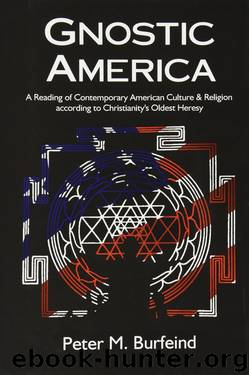
Author:Peter M Burfeind [Burfeind, Peter M]
Language: eng
Format: epub
ISBN: 9780692260494
Amazon: 0692260498
Publisher: Pax Domini Press
Published: 2014-08-18T22:00:00+00:00
Existentialism and the Beats
Existentialists Heidegger, Sartre, and Camus carried on Nietzsche's teachings. From Heidegger came the notion of the "authentic Self," a Self wrapped in external falsities born again through the vehicle of choice. As I choose my own Self – however I choose to define it against "the They"54 – I become authentic.
Heidegger also spruced up an old mystical term and re-gifted it to us, Gelassenheit, further exhibiting existentialism's religiosity. In medieval mystical circles the term meant to let loose of one's self and depend solely on God. The modern expression Let go and let God is a direct descendant, as is the current surrender piety inspiring both religious and secular elements. For Heidegger, it meant a sort of releasement or let it be. (Paul McCartney's song was a hymn saluting the same idea.) The idea is, Just go with the flow and let it go!
How this attitude relates to being an authentic Self might be confusing. How can we at one time create our own authentic Selves and then go with the flow? Heidegger himself developed in his thinking on authenticity. In his early years authenticity was related to a resolute decision to be what one chooses to be. In his later years, it was related more to this idea of releasement, of going with the flow, kind of like how he went with the flow and became a Nazi.
His development has parallels to how our own culture has evolved. Being one's own person has somehow developed into an almost conformist going with the flow. Given the existential and iconoclastic bases of the postmodern creed – it's essential rebelliousness – this only makes sense according to the Gnostic and mystical view that true spirituality means breaking from convention while affirming the Self, but the Self is collectively connected to other freed Selves at the pleromic level.
Jean Paul Sartre, like Heidegger, embraced the "authentic life" over against oppressive conformity, which he called "the Other in us." He shared with Heidegger the idea that man is "thrown" into the world, "condemned to be free."55 Sartre's popular novel Nausea (1938) excoriates the mechanized conformity of the modern world, telling the story of Antoine Roquentin, who settles in a French town only to become oppressed to the point of nausea by the conformity of the town. Only after facing the nothingness of his existence, the existential angst, can he be truly free, to carve out his own existence by his own freely-made choices.
Albert Camus, author of such works as The Stranger (1942), The Plague (1947), and The Fall (1956), also penned a nonfiction work titled The Rebel (1951). The true rebel, he explains, is not a political rebel, one who attempts to inaugurate a utopian state in the place of the established order – such a system invariably ends up being more oppressive – rather the true rebel is the one who rebels individually against the cosmos itself, its tragic indifference to human plight. He calls this rebellion a "metaphysical rebellion."56
Film director
Download
This site does not store any files on its server. We only index and link to content provided by other sites. Please contact the content providers to delete copyright contents if any and email us, we'll remove relevant links or contents immediately.
The Secret Power of Speaking God's Word by Joyce Meyer(3167)
Signature in the Cell: DNA and the Evidence for Intelligent Design by Stephen C. Meyer(3125)
Real Sex by Lauren F. Winner(3006)
The Holy Spirit by Billy Graham(2942)
The Gnostic Gospels by Pagels Elaine(2526)
Jesus by Paul Johnson(2351)
Devil, The by Almond Philip C(2324)
23:27 by H. L. Roberts(2245)
The Nativity by Geza Vermes(2226)
Chosen by God by R. C. Sproul(2159)
All Things New by John Eldredge(2157)
Angels of God: The Bible, the Church and the Heavenly Hosts by Mike Aquilina(1952)
The Return of the Gods by Erich von Daniken(1927)
Angels by Billy Graham(1920)
Knowing God by J.I. Packer(1852)
Jesus of Nazareth by Joseph Ratzinger(1802)
The Gnostic Gospel of St. Thomas by Tau Malachi(1782)
Evidence of the Afterlife by Jeffrey Long(1777)
How To Be Born Again by Billy Graham(1775)
